Just a Token “Middleman”? Why Stripe Agreed to Pay More Than $8 Billion for OpenRouter
OpenRouter does not train frontier models or manufacture GPUs. Its value lies in controlling the route between developers, AI models and payments.
An AI “token switchboard” sold for more than $8 billion?
Yes. In August 2026, U.S. payments giant Stripe agreed to acquire OpenRouter in a cash-and-stock deal valued at more than $8 billion.
The jump was striking. OpenRouter had been valued at roughly $1.3 billion after a funding round in May 2026. Within months, its price had multiplied several times over.
How can a company that trains no frontier model and manufactures no GPUs be worth that much?
It Is Not a Model Lab. It Is AI’s Switchboard
OpenRouter does not build GPT, Claude, Gemini or Llama. Instead, it places models from OpenAI, Anthropic, Google, Meta, DeepSeek, Mistral, xAI and many other providers behind one interface.
A developer can create one account, fund one balance and integrate one API rather than maintaining separate accounts, API keys, billing systems and technical formats for a long list of providers.
Requests first reach OpenRouter. Based on the selected model, price, speed, availability and developer preferences, the platform routes each request to an appropriate model endpoint. It then returns the response to the application.
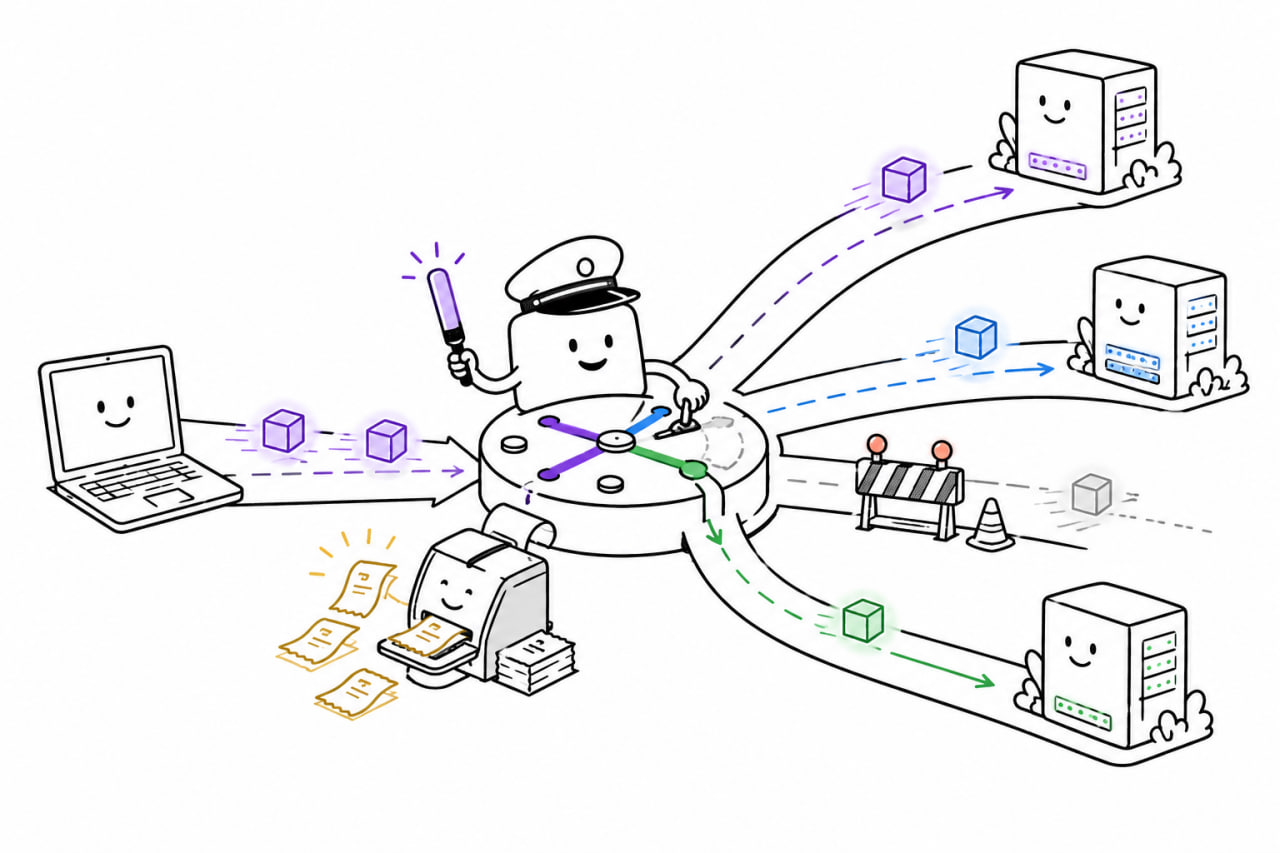
What OpenRouter actually provides
A unified gateway for model access, routing, billing, monitoring and failover—not the GPUs or the model training itself.
Does OpenRouter “Resell” Tokens?
Calling it a token reseller is catchy, but not quite accurate. OpenRouter says it passes through underlying model-provider prices without adding a markup to the model rate. Its standard fee is charged when users purchase credits: 5.5%, with a minimum charge of $0.80. Cryptocurrency payments carry a 5% fee.
Developers can also bring their own provider keys through BYOK. The first one million BYOK requests each month are free; usage beyond that carries a fee equal to 5% of what the same model and provider would normally cost through OpenRouter.
That makes the business look less like traditional retail and more like a combination of a payments network, cloud marketplace and API gateway. OpenRouter consolidates access and settlement, then earns fees from transactions and services.
Why Not Go Directly to OpenAI or Anthropic?
Because modern AI applications rarely rely on a single model:
• Complex reasoning may go to a flagship OpenAI or Anthropic model.
• Long-context analysis may be assigned to Gemini.
• Coding may use a specialized code model.
• High-volume, price-sensitive work may use an open-weight or lower-cost model.
• If one provider is down or rate-limited, traffic may need an automatic fallback.
Building this internally means integrating different authentication systems, request formats, prices, limits, bills and error codes. OpenRouter hides much of that complexity behind a unified interface and allows teams to set preferred providers, backups and their own keys.
For individual developers, that means less repetitive code. For companies, it can mean clearer cost controls, usage monitoring and less dependence on a single vendor.
The Valuable Asset Is Not Just the API
A menu containing hundreds of models would not, by itself, justify an $8 billion price. OpenRouter’s strategic value comes from its position between AI applications and model suppliers.
That position can create three important assets:
A study involving OpenRouter analyzed more than 100 trillion tokens of real-world activity, revealing trends in open-weight model adoption, coding, creative roleplay and agentic workloads. That kind of visibility can help a routing platform understand the AI market as it changes.
The Middleman Model Still Has Risks
Supplier dependence: OpenRouter still relies on upstream model labs and cloud providers. Changes in pricing, API terms or access rules can flow directly through the platform.
Margin pressure: If model prices keep falling and enterprise buyers negotiate aggressively, OpenRouter must keep expanding volume or sell more valuable business features.
Privacy and compliance: Companies must review data retention, logging, provider selection and security settings before sending sensitive prompts through an intermediary.
Large customers can build their own: Companies with sufficient scale may negotiate directly with model providers and operate internal gateways for greater control and lower costs.
Stripe May Be Buying AI’s Payment-and-Routing Layer
Stripe made online payments easier by connecting merchants to cards, banks and payment methods through one integration. OpenRouter does something conceptually similar for AI: it connects applications to many models and inference providers through one API.
Stripe routes money.
OpenRouter routes tokens.
As AI moves from chatbots toward agents, one user request may trigger several models and many small compute charges behind the scenes. Model routing and payment settlement may become increasingly difficult to separate.
Seen that way, Stripe is not merely buying an API aggregation website. It may be buying a future transaction layer for the AI economy.
In every gold rush, some companies mine, some sell shovels—and some build the roads, collect the tolls and direct the traffic. OpenRouter chose the last business.