Token Technology, Industry, and Economics: A Deep Dive From First Principles to Global Markets
Tokens began as an internal unit for processing language. They are now becoming a practical way to measure AI workloads, infrastructure demand, API costs, and the economic value created by models and agents.
Introduction
Generative AI is reshaping the global technology and business landscape, while tokens are emerging as one of the most important units for observing that change.
A token is commonly described as the smallest unit of text processed by a model. But it is no longer only a technical concept. As AI expands from chat into coding, image and video generation, enterprise automation, and autonomous agents, tokens increasingly connect computing resources to commercial activity.
Some industry reports have estimated that global model usage could rise from roughly 1.7 trillion tokens in 2024 to around 140 trillion in 2026. Such numbers should be treated as directional estimates: providers use different datasets and may count public APIs, internal enterprise calls, applications, or selected models differently.
The trend is nevertheless clear. AI agents, multimodal systems, long contexts, and automated workflows can increase the amount of inference needed to complete a task.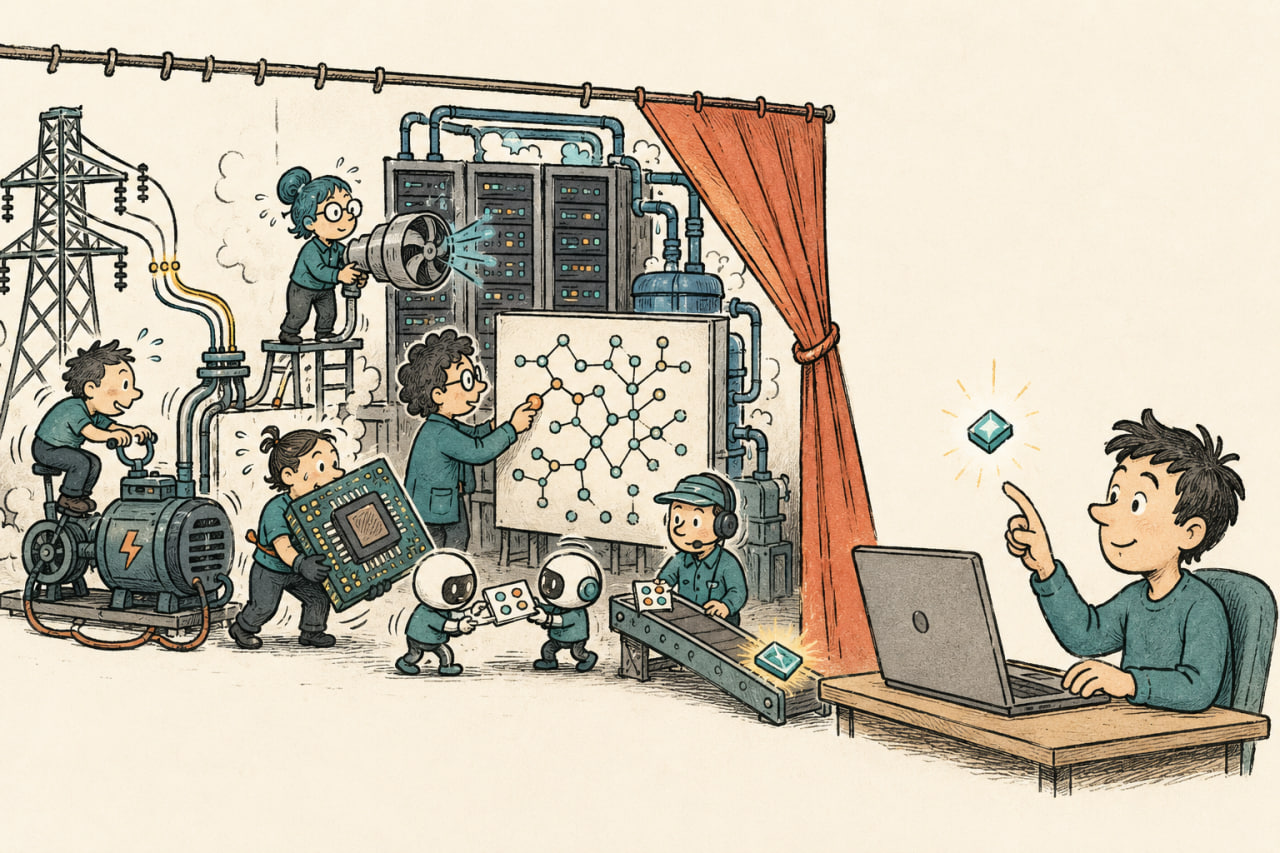
1. What Is a Token?
In a large language model, a token is a basic unit used to read and generate information. It may be a whole word, part of a word, punctuation, a number, or another character sequence. The exact split depends on the model’s tokenizer.
A sentence that contains only a dozen visible words may become a larger number of tokens after processing. Token efficiency also differs across languages. English text can often be divided into reusable roots and fragments, while Chinese and other writing systems may produce different token counts for the same meaning.
Tokens serve several functions:
- converting language into numerical sequences a model can process;
- measuring input and output context;
- estimating inference workload;
- supporting API billing;
- helping developers control budgets and task costs.
Technically, a token is a bridge between human expression and machine computation. Economically, it is becoming a metering unit for AI services.
2. Why Tokens Matter to the AI Economy
Traditional software is often priced by user, license period, or feature package. Model APIs are commonly priced by actual usage.
A request creates input tokens, while the response creates output tokens. Providers may also price cached reads, cache writes, batch jobs, long contexts, and service tiers separately.
This resembles cloud computing: customers pay according to the resources they consume. The model is flexible, but it creates new cost-management challenges.
A basic classification task may use very few tokens. Deep research may require web searches, large documents, repeated inference, and verification. As agents become more common, billing shifts from the cost of one answer toward the total cost of completing an entire workflow.
Useful questions therefore include:
- How many tokens does the complete task require?
- How many model calls are made?
- Does the context keep expanding?
- Do failed tool calls trigger retries?
- Are multiple agents repeating the same analysis?
- Does the final output create measurable value?
3. The Cost Stack Behind a Token
The price displayed on an API page is a market price, not a direct measure of physical production cost. Every token depends on a larger stack.
Electricity
GPUs, CPUs, storage, networking, and cooling require continuous power. Facilities also pay for distribution, redundancy, and backup systems.
AI accelerators
Training and inference may use NVIDIA GPUs, Google TPUs, AWS Trainium, and other specialized chips. High-bandwidth memory, networking, and server integration add to the bill.
Data centers
Accelerators need high-speed networks, power systems, cooling, physical security, monitoring, and continuous maintenance. An AI cluster is an engineered system, not simply a room full of graphics cards.
Models and inference software
Architecture, quantization, caching, batching, routing, scheduling, and inference engines determine how many useful tokens a given hardware fleet can produce.
Applications and customer operations
API gateways, developer tools, account systems, support, security, compliance, research, and profit margins also contribute to the price paid by customers.
4. The Five Layers of the Token Industry
Layer 1 — Energy and physical resources: power, land, water, grid access, and sites.
Layer 2 — Chips and servers: accelerators, HBM, CPUs, storage, optics, and networking.
Layer 3 — Cloud and compute platforms: infrastructure packaged into rentable services.
Layer 4 — Foundation models and APIs: language, image, video, and multimodal capabilities.
Layer 5 — Applications and agents: workflows that turn inference into useful outcomes.
In the United States, natural gas, nuclear, wind, solar, and hydro resources may all support future AI data centers. But low-cost electricity is not enough. Grid connections, fiber, permits, cooling, and skilled operations are also necessary.
NVIDIA remains central to advanced AI hardware, while AMD, Google, Amazon, and chip startups are pursuing alternatives. Microsoft Azure, AWS, Google Cloud, Oracle Cloud, and CoreWeave then package infrastructure for developers and enterprises.
At the model layer, OpenAI, Anthropic, Google, Meta, xAI, Mistral, and others translate compute into language and multimodal capabilities. Applications finally apply those capabilities to coding, support, research, finance, science, media, and automation.
5. Why Token Prices Keep Falling
Per-token API prices have generally declined as inference systems become more efficient and competition increases. Quantization, batching, caching, speculative decoding, model routing, and better orchestration allow providers to serve more work from the same infrastructure.
Open and open-weight models also pressure proprietary API pricing by allowing organizations to deploy models in their own cloud accounts or facilities.
However, cheaper tokens do not guarantee a lower AI bill. More capable applications may use longer contexts, additional model calls, and more tools.
6. How AI Agents Change Token Consumption
A conventional chatbot often handles one prompt and one answer. An agent may plan, search, read files, call tools, execute code, inspect results, retry failures, and then produce a final response.
A multi-agent system may add a market-data agent, policy agent, sentiment agent, risk agent, and coordinator. This can improve verification when roles genuinely differ—but merely duplicating the same data and reasoning wastes tokens.
Well-designed agent systems need:
- a maximum token budget;
- limits on tool calls and retries;
- clear stopping conditions;
- distinct responsibilities;
- a standard for validating the final result.
Using more tokens does not automatically produce a more intelligent result.
7. Multimodal AI Expands the Meaning of Tokens
Tokens began as a text concept, but multimodal models also convert images, audio, and video into discrete units or internal representations that can be processed computationally.
The broader AI-metering economy now includes:
- image generation and understanding;
- speech recognition and synthesis;
- music generation;
- video creation and analysis;
- robotics and machine vision;
- 3D content and spatial computing.
Video can require far more computation than text because models must represent scenes, objects, movement, and temporal relationships. Some providers therefore bill by seconds, resolution, or generation rather than exposing token counts directly.
The “token economy” is best understood as a broader system for measuring and pricing AI inference resources—not as one universal billing unit across every modality.
8. Four Token-Economy Battles to Watch in the United States
Model capability and price
Providers compete on reasoning, speed, context length, multimodal performance, and economics.
Cloud and infrastructure capacity
Cloud platforms and specialized GPU providers are expanding data-center capacity to capture training and inference demand.
Chips and inference efficiency
NVIDIA holds a key position, but AMD, custom cloud chips, and new accelerator designs continue to challenge the economics of inference.
Agents and application distribution
The largest profits may not remain entirely at the model layer. Companies controlling workflows, customer relationships, and specialized applications can capture substantial value.
9. China as a Global Token-Market Case Study
China is an important international case because it combines a large internet population, enterprise digitization, domestic models, cloud platforms, data centers, and growing AI adoption.
Some industry reports suggest that Chinese models account for a rising portion of incremental global token usage. Exact shares should be interpreted cautiously because data sources and coverage vary.
Potential strengths include:
- large application markets;
- strong product and software engineering;
- local-language and industry data;
- competitive API pricing;
- energy and data-center construction;
- services for overseas developers.
Challenges include access to advanced chips, overseas compliance, data governance, and international competition. The case shows that the token economy is a global contest spanning energy, hardware, clouds, models, and applications.
10. Risks Facing the Token Economy
Inconsistent measurement: providers define usage, users, and revenue differently.
Price compression: lower API prices help developers but can pressure model-company margins.
Compute oversupply: infrastructure built ahead of demand may suffer low utilization.
Energy and environmental pressure: large facilities can stress grids, land, and water resources.
Data security: enterprises must understand storage, training use, access control, and cross-border transfers.
Agent cost overruns: automation without budgets or stopping rules can call models indefinitely.
Geopolitical risk: chip controls, manufacturing concentration, cloud rules, and data policies can reshape supply chains.
Conclusion: Token Value Comes From Outcomes, Not Volume
Tokens have evolved from an internal model unit into an industry metric connecting energy, chips, cloud computing, models, and applications. But a token is not valuable merely because it was generated.
The real objectives are to:
- complete tasks with fewer tokens;
- reduce energy and hardware cost;
- make model output more reliable;
- convert AI capability into productivity and revenue;
- avoid wasteful inference and duplicated work.
Note: Token-volume forecasts and market-share estimates vary by source, coverage, and methodology. Figures in this article are directional and should not be treated as audited global totals.