AI Agents & Inference
Is Token Maxing Worth It? From OpenClaw and Hermes to Local Multi-Agent Systems
More tokens, longer context and additional agent debate can improve difficult tasks—but only when the extra inference budget produces verifiable gains worth the cost.
If an AI agent receives more tokens, a longer context window and more time to reason, does it automatically become smarter?
Some developers use the informal phrase “Token Maxing” to describe an experimental approach: instead of asking a model to answer with the fewest possible tokens, they let it reason longer, call more tools and participate in multi-agent discussion, criticism and verification.
OpenClaw, Hermes and a range of local agent frameworks can be used for experiments in this direction. The common objective is not simply longer output. It is to divide a complex task among specialized roles responsible for research, analysis, challenge, execution and synthesis.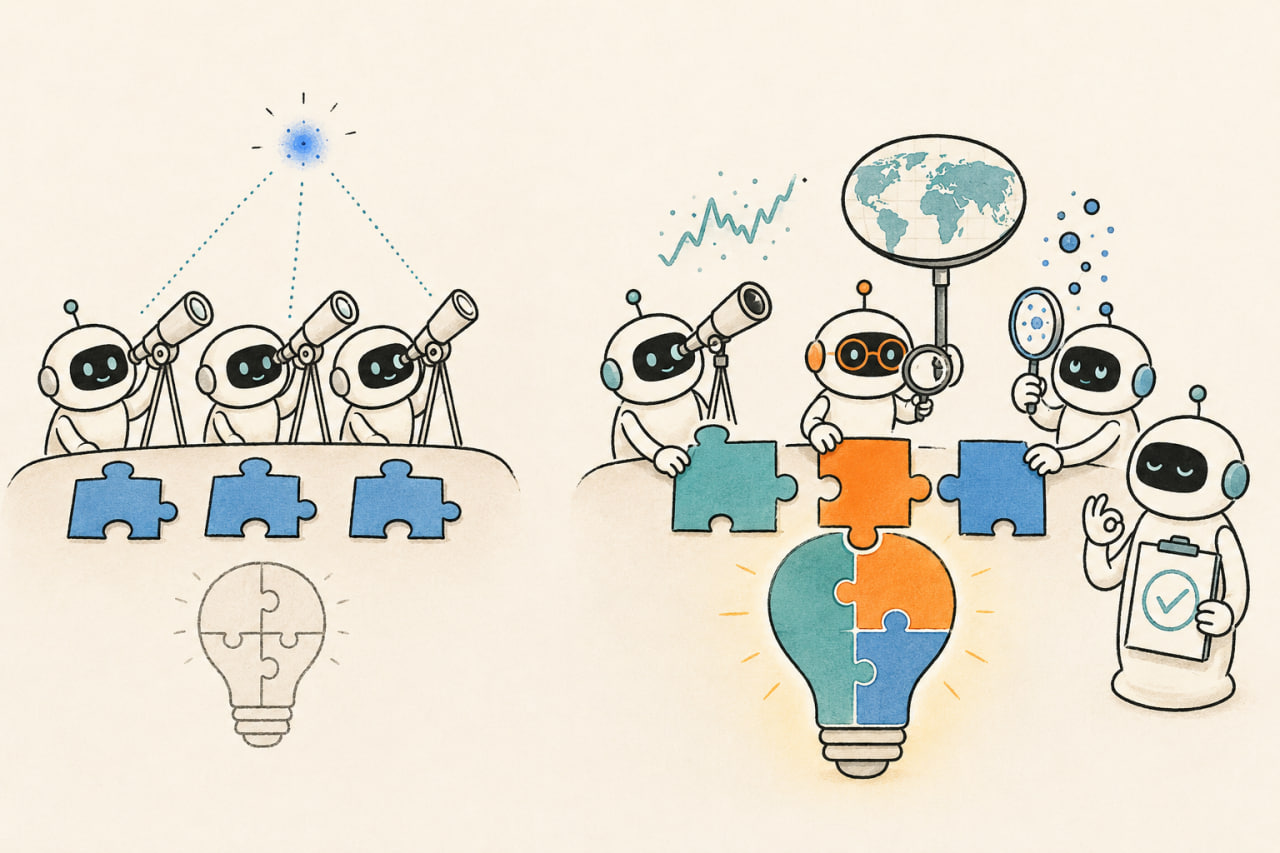
The real challenge is converting additional inference compute into more dependable results.
Token Maxing Is an Engineering Strategy, Not a Formal Standard
Token Maxing is not a universally defined academic or industry term. It is better understood as a casual label for a family of inference-time scaling strategies.
After a model has been trained, developers can still spend more inference compute to improve performance on some tasks:
- ◆Generate multiple candidate answers;
- ◆Ask a model to inspect and revise its own work;
- ◆Use search, code execution or database tools;
- ◆Let multiple agents analyze the same problem from different angles;
- ◆Apply evaluators or explicit rules to select a stronger answer;
- ◆Give complex tasks more context and execution steps.
These approaches exchange additional inference compute for a chance at higher accuracy or stronger task completion.
The gains are rarely linear. Increasing a task from 2,000 to 10,000 tokens may produce a meaningful improvement; moving from 10,000 to 100,000 may not deliver comparable value. Beyond some point, a model may repeat itself, amplify an early mistake or invent new problems simply because it has been instructed to continue reasoning.
That is why Token Maxing needs evaluation criteria and stopping conditions.
From One Agent to an “AI Boardroom”
One of the most useful ideas in multi-agent design is to assign a complex decision to genuinely different roles instead of asking one model to do everything.
For investment research, a system might use four agents:
Market Data Agent
Analyzes financial statements, price behavior and industry data.
Macro and Policy Agent
Tracks interest rates, regulation and geopolitical risk.
Sentiment Agent
Monitors news, analyst opinions and social-media sentiment.
Risk and Contrarian Agent
Actively searches for missing evidence and failure scenarios that challenge the other agents.
A coordinating agent can then summarize which facts are verified, which judgments remain disputed and what evidence supports the final report.
Developers sometimes call this structure an “AI Council” or “AI Boardroom.” Its value does not come from the number of agents. It comes from meaningful differences in information sources, tools and evaluation criteria.
If four agents use the same model, prompt and data, they may simply repeat the same answer in different words. Genuine diversity requires different assignments, tools, sources or scoring objectives.
What Do OpenClaw, Hermes and Local Agents Represent?
OpenClaw can be treated as one example of agent automation: developers combine orchestration, tool use and task loops so a model can complete multiple steps in sequence.
Hermes is commonly associated with open model releases from Nous Research. It represents another path—using models that can be deployed locally or controlled directly to build more private and customizable agent systems.
Local agent frameworks are broader than any single project. Developers can run open models on a personal computer, workstation or private server and connect them to local files, code environments and internal knowledge bases.
| Closed cloud models | Often more capable and easier to deploy, but API cost and data control are central concerns. |
| Open models | Customizable and locally deployable, but require more engineering and hardware investment. |
| Agent frameworks | Connect models, tools, memory and workflows; they do not determine the underlying model’s capability by themselves. |
These names may occupy different layers of the stack: one can be a model, another a framework and another an end-to-end workflow. They should not be compared as if they were interchangeable products.
Why Are Local Agents Attracting Attention?
For U.S. businesses and developers, local agents offer four main attractions.
- Privacy: Healthcare, legal, financial and internal corporate data may not be suitable for continuous transmission to a third-party API.
- Cost: Cloud token fees can grow rapidly when agents perform high-volume repetitive work.
- Control: Organizations can pin model versions, customize system instructions, connect internal tools and audit agent actions.
- Availability: Local systems are less dependent on an external API’s uptime, rate limits or policy changes.
Local AI is not free. GPUs, electricity, maintenance, model upgrades and security management all carry costs. Open models may also trail the strongest cloud models on some difficult reasoning tasks.
A hybrid architecture is often more practical: local models handle classification, retrieval, data cleaning and routine work, while stronger cloud models are reserved for difficult or high-value stages.
When Are More Tokens Actually Valuable?
Token Maxing is best suited to tasks where:
- The problem is complex and requires multiple steps;
- The answer can be verified through code, search or explicit rules;
- Errors are expensive enough to justify additional checks;
- Sources conflict and require repeated comparison;
- The output will be reused, such as a research report, software system or business decision.
It is poorly matched to simple questions, fixed-format conversion or low-value batch work. If a user only needs store hours, there is little reason to convene five agents.
The Budget Test
Is the expected value of additional reasoning greater than the extra model cost, latency and system complexity?
Five Ways Multi-Agent Systems Fail
1. Every agent shares the same mistake
When agents depend on the same model and sources, one error can be accepted by every role, producing a consensus that is still wrong.
2. The conversation has no stopping condition
Agents can keep replying to one another without producing new evidence. A system needs maximum turns, a budget and explicit completion criteria.
3. Roles differ only in their names
Calling one agent a researcher and another a critic does not guarantee different methods. Roles need distinct tools, sources and scoring rules.
4. The coordinator hides disagreement
A final summarizer may smooth unresolved conflicts to produce a fluent answer. Strong reports preserve minority views and evidence gaps.
5. Token cost exceeds task value
If an analysis is worth tens of dollars but consumes hundreds in model fees, even a good result has little commercial value.
How to Run a Real Token Maxing Experiment
- Build a single-agent baseline. Record token use, completion time, citation accuracy and output quality.
- Divide the task into genuinely different roles. Give each role independent sources or tools.
- Add a contrarian agent. Require it to search specifically for evidence that could overturn the main conclusion.
- Constrain the coordinator. It should synthesize cited material rather than inventing new facts.
- Set an explicit budget. Limit model calls, tokens and runtime.
- Compare results. Use human ratings or automated tests to determine whether accuracy gains justify the cost.
Without a baseline, budget and scoring method, Token Maxing easily becomes “letting the model talk more” rather than meaningful engineering optimization.
Top Cloud Models or Local Open Models?
The choice is not binary.
Leading cloud models are well suited to complex reasoning, coding, long-document analysis and high-stakes tasks. Local open models are attractive for privacy-sensitive, frequent, predictable or highly customized workflows.
A common layered architecture looks like this:
- A small local model classifies and routes requests;
- A local mid-sized model performs retrieval summaries and preliminary analysis;
- A powerful cloud model handles the most difficult reasoning;
- Rules, code and human review provide final verification.
This approach can cost less than sending every task to the most expensive model while producing stronger results than an entirely local system.
The Goal of Token Maxing Is Not More Tokens
Agent evolution is not a simple progression from a few tokens to unlimited tokens.
A mature system allocates its budget. Simple tasks end quickly, while difficult tasks receive additional reasoning time. Low-risk requests use local models; high-risk decisions use stronger models and human review.
OpenClaw, Hermes and local agent experiments are valuable because they let developers explore combinations of models, tools and workflows. No framework can avoid the basic economic test: only verified tokens that complete useful work are worth paying for.
The important question is not “How many tokens did we burn?” It is “How many errors did those extra tokens prevent, how much work did they complete and how much measurable value did they create?”