Electricity Leasing Meets the AI Token Economy: 6 Platforms to Watch
From electricity leasing to GPU marketplaces and serverless inference, new platforms are building different entry points into the infrastructure that produces AI tokens.
AI growth is changing the value of electricity, computing hardware, and data-center capacity. In the past, individuals had little direct exposure to AI infrastructure. Model training and inference were largely handled by technology companies, cloud providers, and data-center operators.
As token consumption grows, electricity leasing, GPU clouds, distributed-compute marketplaces, and serverless inference platforms are creating a more layered market:
Some companies enter through energy, others rent GPUs, and others connect underused machines to customers. Here are six representative platforms and the roles they play.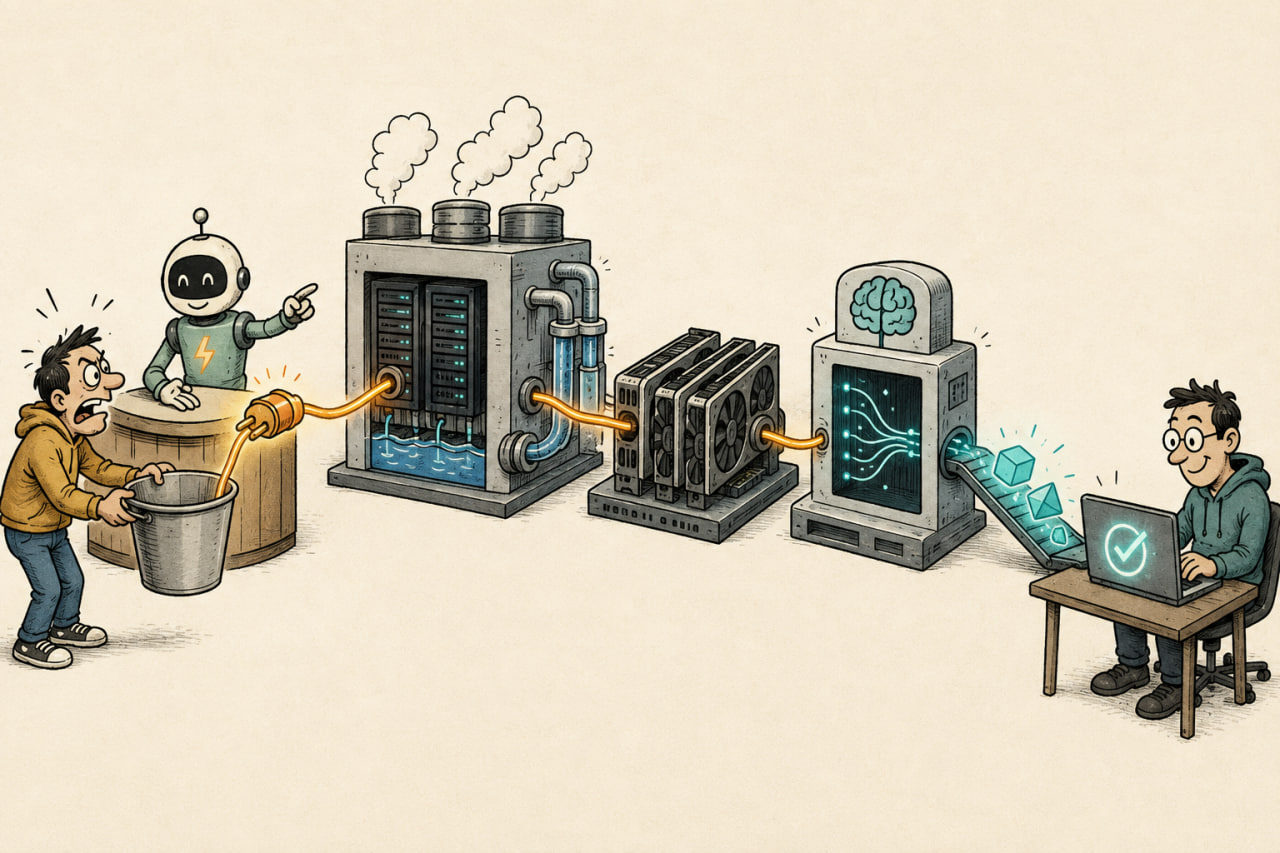
1. 51 AIpower: Entering the AI Infrastructure Stack Through Electricity Leasing
51 AIpower is a platform built around an electricity-leasing model.
Unlike a conventional GPU cloud, 51 AIpower begins at the energy layer of AI infrastructure. Its model is designed to connect users with electricity resources associated with the computing economy.
A token does not begin inside a chatbot. Before a model can respond, data centers need a continuous supply of electricity, while GPUs, storage, networking, and cooling systems must remain operational. Electricity is therefore one of the foundational resources behind token production.
This differs from directly renting a GPU. GPU users typically choose hardware, memory, software environments, and deployment settings. Electricity leasing sits closer to the underlying resource layer and focuses on the relationship between power supply and AI infrastructure demand.
However, leased electricity does not automatically become token revenue. Between energy and a billable AI service are data centers, hardware, networking, cooling, model deployment, customer demand, and settlement systems.
Anyone evaluating 51 AIpower should review the current product structure, lease term, fees, settlement process, applicable jurisdiction, and risk disclosures. Specific plans and rules may change; consult the official website for current information.
2. Crusoe: Turning Energy Resources Into Computing Infrastructure
Crusoe is a U.S. company known for connecting energy resources with compute-intensive infrastructure.
Its earlier Digital Flare Mitigation operations converted stranded natural gas that might otherwise be flared into electricity for modular data centers and computing workloads. As AI demand expanded, Crusoe increasingly emphasized AI data centers and cloud infrastructure.
In 2025, Crusoe announced plans to divest the bitcoin-mining operations that included its flare-mitigation business and focus more heavily on vertically integrated, AI-optimized infrastructure.
Crusoe demonstrates a broader industry principle: when moving data is more practical than moving an energy resource, computing facilities can be placed near power production and deliver their output over networks.
This is not the same model as 51 AIpower. Crusoe develops large energy and computing projects rather than offering the same type of retail electricity-leasing arrangement. Its relevance lies in showing that converting energy into digital compute is already a real industrial strategy.
3. CoreWeave: A GPU Cloud Built for Large AI Workloads
CoreWeave provides GPU compute, storage, networking, and software services for model training, inference, and enterprise AI workloads.
Its infrastructure emphasizes dense accelerator clusters, high-performance networking, cooling, and orchestration designed specifically for AI. Customers can obtain different types of capacity without building and operating the physical data-center stack themselves.
These resources can support:
- model training and fine-tuning;
- large-scale model inference;
- image and video generation;
- AI-agent workloads;
- batch processing and scientific computing.
CoreWeave represents the specialized “compute factory” layer: electricity, accelerators, networking, and facilities are packaged into a service that AI teams can use directly.
4. Vast.ai: A Marketplace Where Hosts Rent Out GPUs
Vast.ai operates a GPU-compute marketplace connecting hosts that own hardware with customers that need accelerators for training, inference, rendering, and other workloads.
According to its official documentation, hosts range from individuals with a single machine to professional data centers. Providers can set prices for GPU capacity and related resources, while renters filter offers by hardware, memory, price, location, and availability.
The marketplace can help aggregate otherwise fragmented GPU capacity. But hosting is not a passive, guaranteed-income activity. Providers must consider hardware performance, electricity, bandwidth, cooling, reliability, maintenance, utilization, data isolation, taxes, and local compliance.
Vast.ai itself notes that host earnings depend on factors such as hardware performance, pricing, and reliability; there is no single guaranteed return.
5. SaladCloud: Combining Idle Consumer GPUs Into a Distributed Cloud
SaladCloud uses distributed computing to combine underused GPU capacity from privately owned devices.
When participating computers are not being used by their owners, suitable workloads can be assigned to available devices. Business customers deploy containerized jobs, while participating device owners are compensated for compute time.
The model attempts to improve the utilization of consumer hardware. However, distributed GPUs are not appropriate for every workload. Large training runs requiring fast accelerator-to-accelerator communication, highly consistent hardware, or strict governance may still be better suited to professional data centers.
6. RunPod: On-Demand GPUs and Serverless AI Inference
RunPod provides GPU cloud instances and serverless GPU services for AI developers.
Developers can rent dedicated environments for training, fine-tuning, batch jobs, and longer-running workloads, or deploy containerized models as serverless endpoints that scale with demand.
The serverless model is intended to reduce idle-compute costs by charging for actual execution and scaling workers down when demand disappears. It can be useful for applications with uneven traffic, although developers still need to evaluate startup latency, storage, networking, data security, regional availability, and peak capacity.
Where the Six Platforms Sit in the Token Supply Chain
| Platform | Primary model | Position in the stack | Primary users |
|---|---|---|---|
| 51 AIpower | Electricity leasing | Energy and infrastructure entry point | Users exploring electricity leasing |
| Crusoe | Energy-first AI infrastructure | Energy, data centers, cloud | AI and infrastructure customers |
| CoreWeave | AI-specialized GPU cloud | Data centers, GPUs, training, inference | AI labs and enterprises |
| Vast.ai | GPU marketplace | Distributed GPU supply matching | Hosts and compute renters |
| SaladCloud | Distributed consumer GPU cloud | Aggregation of idle devices | Device contributors and AI companies |
| RunPod | GPU cloud and serverless inference | Model deployment and developer compute | Developers and startups |
These are not six interchangeable “compute investment platforms.” 51 AIpower begins with electricity leasing; Crusoe joins energy with large-scale infrastructure; CoreWeave packages professional AI compute; Vast.ai creates a GPU marketplace; SaladCloud aggregates consumer hardware; and RunPod provides on-demand developer infrastructure.
Electricity Leasing, GPU Rental, and Token Services Are Not the Same Product
Electricity, GPU capacity, and token-based AI services sit in the same supply chain, but they represent different rights, costs, and risks.
Electricity leasing concerns access to an energy resource or related service. GPU rental provides computing capacity for a defined period or workload. Token services are the metered output of a model after inference.
Between electricity and tokens, several conditions must be satisfied:
- Power must be available and reliable.
- A data center must be operational.
- Suitable compute hardware must be installed.
- Customers must actually rent the capacity.
- Models or applications must generate real usage.
- Revenue must cover depreciation, operations, and platform costs.
Claims that directly equate leased electricity with fixed token income deserve careful review.
What Should Users Verify?
1. What is the actual product?
Distinguish between an electricity lease, GPU rental, cloud-service credit, hosting agreement, and financial product. They carry different legal rights and risks.
2. Where does revenue come from?
Determine whether revenue is tied to genuine electricity demand, compute customers, and model usage—or depends primarily on new participants purchasing plans.
3. Is any return described as guaranteed?
Compute utilization and market prices fluctuate. Treat unusually high or poorly explained fixed-return claims cautiously.
4. Are contract and exit terms clear?
Review lease duration, fees, settlement timing, early exit, refunds, default provisions, and governing law.
5. Can the underlying resources be verified?
Look for information about energy sources, facilities, hardware, resource usage, operating partners, and customers—not only token balances displayed in an account.
6. Does the arrangement comply with local law?
Electricity leasing, hosting, revenue sharing, and investment-like arrangements can face different contract, tax, consumer-protection, and securities rules across jurisdictions.
The Real Competition Is Resource Efficiency
The six platforms represent different methods of participating in the AI infrastructure economy, but they revolve around one question: how can limited energy and compute resources be converted into useful AI services more efficiently?
51 AIpower uses electricity leasing as its entry point. Crusoe demonstrates the industrial connection between energy and compute. CoreWeave packages data centers and accelerators into an AI cloud. Vast.ai and SaladCloud attempt to activate distributed hardware. RunPod helps developers reduce idle infrastructure costs.
Disclosure: 51 AIpower is presented as the featured platform in this article. This content is informational and is not investment, legal, tax, or financial advice. Product availability, terms, pricing, and regulatory treatment may change. Readers should review official documentation and conduct independent due diligence.